Overview & First Impressions
China Airlines, often considered one of Asia's more underrated carriers, offers a compelling Premium Economy product on its long-haul routes. This review covers a 10-hour and 45-minute flight on their Boeing 777-300ER from Taipei (TPE) to Vancouver (YVR), examining whether the upgrade from Economy is justified, and how it stacks up against Taiwanese rivals EVA Air and Starlux.
The journey commenced at Taoyuan Airport in Taipei, where Premium Economy passengers benefit from priority check-in at a dedicated counter. China Airlines is notably generous with its checked baggage allowance, permitting two pieces weighing 28 kg (61 lb) each, surpassing the common 23 kg (50 lb) limit on many other airlines. Carry-on baggage is restricted to one piece at 7 kg (15 lb) plus a personal item, and it's important to note that carry-on bags are strictly weighed, so adherence to the limit is crucial.
While priority check-in is a perk, Premium Economy passengers do not receive complimentary lounge access, a standard practice across most airlines for this cabin class. Security clearance was efficient, leading to boarding at Gate D4. Priority boarding is extended to Premium Economy passengers, who board in Group 5. This places them after those requiring special assistance, Business Class passengers, elite status holders, specific credit card holders, and military personnel, but critically, before general Economy passengers who board in Group 6 or later. Upon boarding, the initial cabin impression was positive, setting the stage for the flight ahead. Welcome drinks, including orange juice, apple juice, or water, were offered prior to takeoff, accompanied by refreshing moist towelettes from the French brand Payot.
Seat, Cabin & IFE
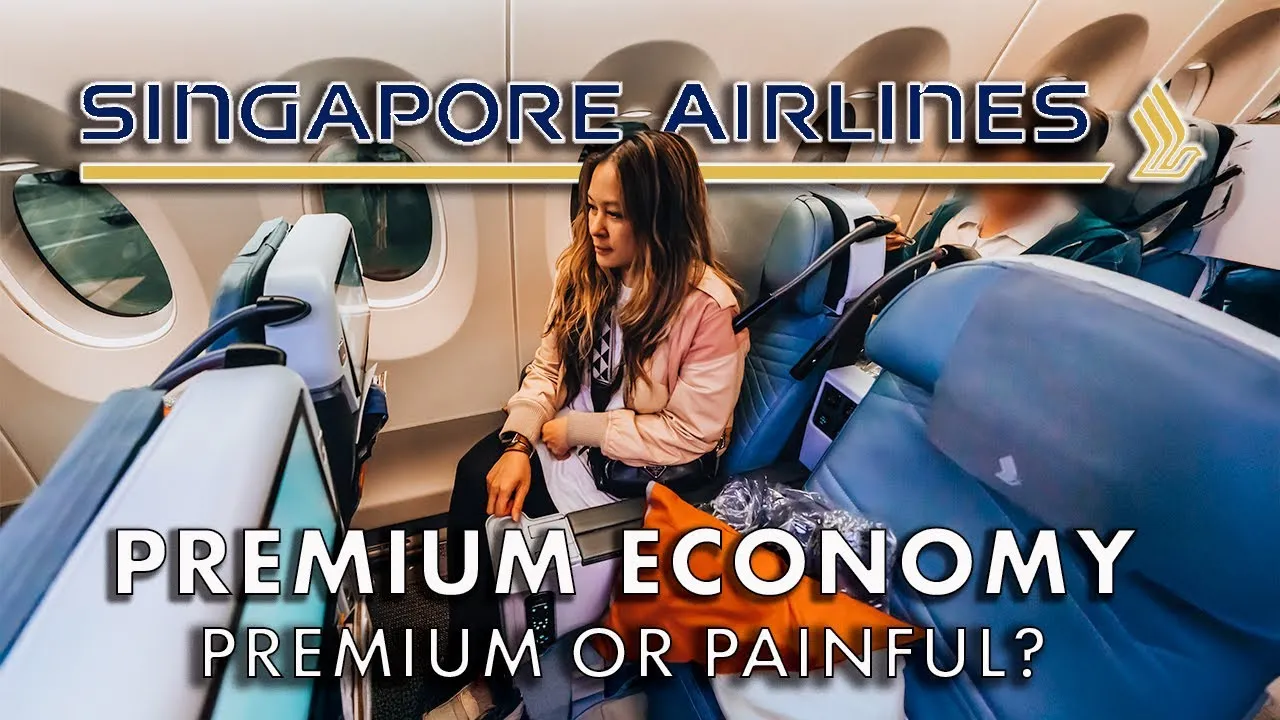
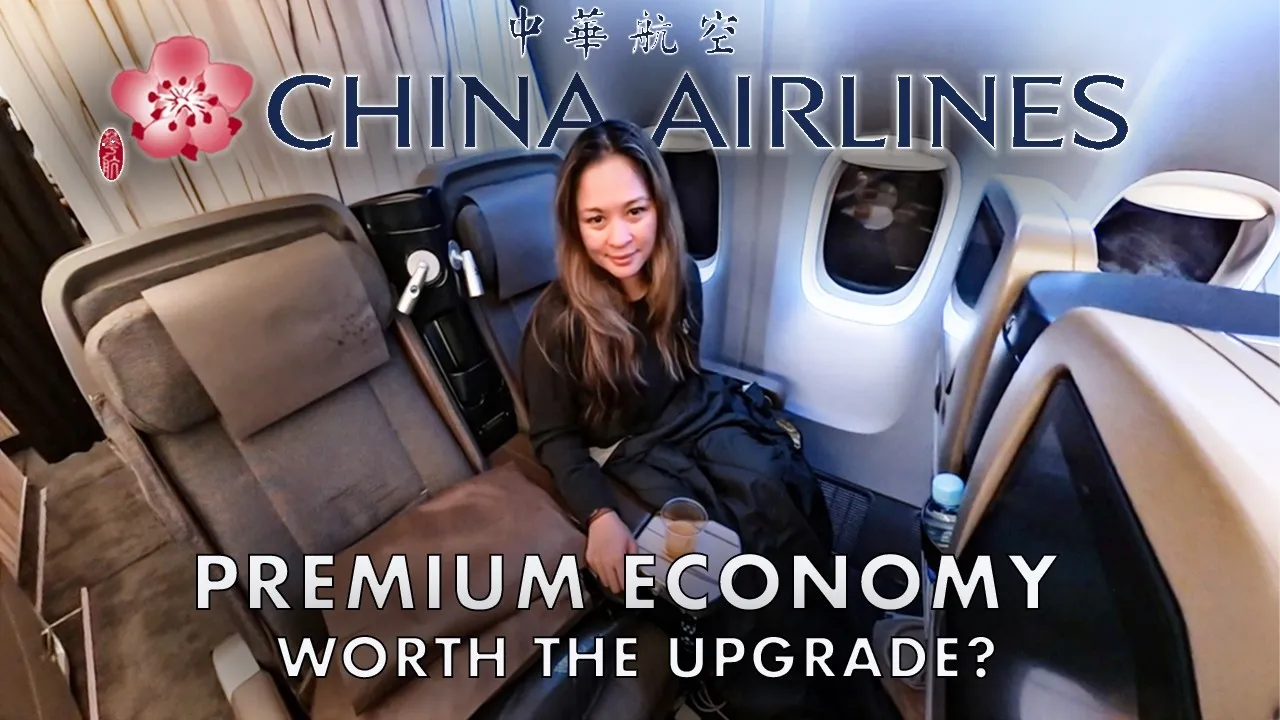
The China Airlines Boeing 777-300ER features a Premium Economy cabin with 62 seats arranged in a comfortable 2-4-2 configuration. The seat reviewed, 36A, was a window seat in the last row of the cabin. Each seat boasts a width of 19 inches (48 cm) and a generous row pitch of 39 inches (99 cm), providing ample personal space. A double-wide armrest between seats includes a small marble-print cocktail tray, perfect for holding beverages.
Connectivity is well-addressed with a universal AC power outlet conveniently located in the center armrest near the floor, alongside a USB-A outlet positioned beneath the In-Flight Entertainment (IFE) screen. The seat design incorporates two tray tables: a smaller flip-out tray for devices or drinks, and a larger, adjustable main tray for meals. Legroom is substantial, complemented by space under the seat in front for personal items. A notable comfort feature is the combination of a foot pedal and a calf rest, which significantly enhances relaxation during the long flight.
Unlike traditional reclining seats, China Airlines' Premium Economy features a hard-shell fixed seat design. This innovative approach means the seat itself does not intrude on the space of the passenger behind. Instead, the seat slides down within its shell, offering an equivalent recline of 118 degrees. This ensures consistent personal space throughout the flight, regardless of other passengers' recline choices.
Lavatories, located between the Premium Economy and Economy cabins, are shared with Economy passengers. While the presence of pleasant artwork adds a touch of personality, the amenities are standard, featuring soaps and lotions from Moroccan Oil. A drawback for germaphobes might be the manual operation of both the garbage bin and the faucet.
Bedding includes a standard-sized pillow and a surprisingly thick, high-quality comforter, which is notably the same as that provided in Business Class, ensuring a warm and comfortable rest. The provided noise-reducing headphones are of good quality for Premium Economy, a necessity as the 12.1-inch (30.7 cm) touchscreen IFE system does not support Bluetooth. While a remote control is available in the armrest, the fixed viewing angle of the screen is not an issue given the seat's non-reclining design. The entertainment library offers a good selection of movies and TV shows, though with a noticeable emphasis on Asian content, suggesting Western film enthusiasts might consider downloading their own entertainment. Complimentary Wi-Fi is a welcome perk for Premium Economy passengers, while Economy is limited to free messaging.
Food, Drinks & Service
The culinary experience in China Airlines Premium Economy begins with digital menus accessible via the IFE system, covering dinner, snacks, and a pre-arrival breakfast, alongside non-alcoholic and alcoholic beverage options. Welcome drinks of orange juice, apple juice, or water are served immediately after boarding, accompanied by refreshing moist towelettes.
Dinner service commences approximately 90 minutes after takeoff. The main course, a roasted chicken thigh with red curry sauce and rice, was an outstanding highlight. Prepared in collaboration with Taipei's Michelin-starred T+T restaurant, the chicken was juicy and well-cooked, and the red curry sauce was exceptionally flavorful—a definite home run. While the main dish was elegantly served in ceramic, the appetizers, sides, and dessert were presented in plastic containers. A full set of metal cutlery is provided, a step above Economy's plastic containers and scaled-down recyclable metal spork and knife.
The accompanying appetizers, including a mini Mediterranean vegetable and pineapple skewer and a chicken, ham, and cheese tart, were described as "just so so" and "nothing special." These were served alongside a green papaya salad with baby squid, onion bread, and a cheese and fruit plate. Dessert included a raspberry macaron, which was unfortunately dry, tasteless, and overly sweet, but this was fortunately offset by a universally appreciated mini vanilla Häagen-Dazs ice cream.
In-between meal snacking options were somewhat limited. While no self-service snack bar was available in the galley, the crew periodically circulated offering rice crackers and water. For something more substantial, sandwiches, such as a tuna, corn, and egg option, were also offered. However, this sandwich was found to be merely "okay" and a little soggy, suggesting passengers might prefer to bring their own supplementary snacks or stick to the rice crackers.
The pre-arrival meal, breakfast, was another culinary success. Passengers could choose between fish and scallop congee or zucchini risotto with ratatouille and soft scrambled eggs. The latter, a collaboration with Michelin Bib Gourmand restaurant Little Tree Food, was highly praised; the scrambled eggs were fluffy and delightful, and the ratatouille fresh and flavorful, making for a truly great breakfast. This was complemented by a side of soybean milk bircher muesli, a fresh fruit plate, and a small croissant. Prior to this meal, another scented Payot towel was distributed. Throughout the flight, the service provided by the crew was consistently excellent—attentive, friendly, and efficient, leaving no room for complaint.