Overview & First Impressions
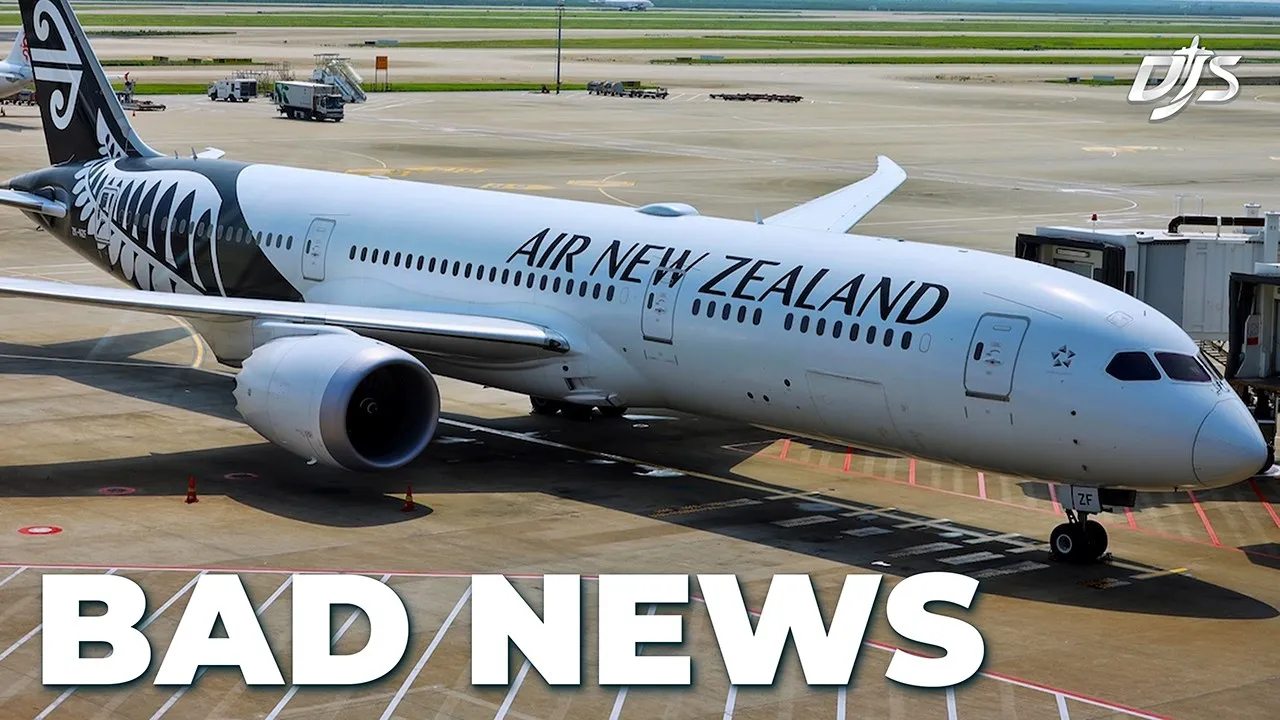
Air New Zealand, the flag carrier of New Zealand, is currently navigating an exceptionally turbulent period, signaling significant challenges for business travelers relying on its network. The airline has recently announced the suspension of its full-year earnings guidance, a direct consequence of the escalating conflict in the Middle East and its profound impact on global aviation. This decision comes after the airline provided interim results and guidance on February 26, 2026, which was predicated on an average jet fuel price of US $85 per barrel for the second half of the year. However, within just two days of this announcement, geopolitical events dramatically shifted the landscape, rendering the initial guidance inappropriate.
The immediate 'first impression' for any business traveler considering Air New Zealand services is one of uncertainty and potential disruption. The sharp escalation in jet fuel prices, now fluctuating wildly between US $150 and $200 per barrel, is a stark departure from the airline's budgeted $85-$90 range. This volatility is driven by a combination of the underlying Brent crude price and an increasingly unstable 'crack spread'—the refinery margin between crude oil and refined jet fuel. Despite Air New Zealand's hedging strategy, securing $83 against Brent crude for the second half, the overall market instability presents an immense financial strain. This suspension of guidance is a clear indicator of the unpredictable economic environment the airline faces, directly impacting its profitability and operational stability, which in turn, affects its ability to deliver consistent service.
This current crisis isn't an isolated incident but rather the latest in a series of significant hurdles for the airline. For the past six years, Air New Zealand has faced 'one thing after another,' from the incredibly slow recovery post-COVID-19 pandemic for this national carrier, to ongoing engine reliability concerns that have frequently grounded aircraft and forced considerable capacity reductions. Just as the airline seemed poised to emerge from these challenges, the current geopolitical situation has pulled it back into a state of flux. This accumulation of difficulties suggests a systemic strain on the airline's operations, which will inevitably translate into a less predictable and potentially more costly travel experience for its customers, particularly those traveling for business where reliability and adherence to schedule are paramount. The profound impact on second-half earnings is now a significant concern, casting a shadow over the airline's immediate future.
Seat, Cabin & IFE
While a traditional review of a flight experience would delve into the specifics of seat comfort, cabin amenities, and in-flight entertainment, this analysis focuses on the broader operational health of Air New Zealand, which profoundly impacts the ability to even experience these aspects. The current challenges faced by the airline, particularly the widespread flight cancellations, directly impinge upon the reliability and predictability that business travelers require when planning their journeys. The suspension of earnings guidance and the dramatic surge in jet fuel prices are not merely financial figures; they are indicators of an environment where operational stability is under severe threat.
The impact of this instability on the 'cabin experience' is indirect but significant. With Air New Zealand planning to cancel approximately 1,100 domestic and international services between now and early April, affecting over 40,000 customers, the primary concern shifts from the quality of a lie-flat seat or the selection of movies to simply being able to reach a destination on time. These sweeping changes include removing two to three return flights per week on some domestic sectors, with heavier cuts anticipated after the peak period extends in April. Such reductions inevitably lead to tightened schedules and drastically reduced flexibility for passengers, making last-minute changes or even adhering to original itineraries a considerable challenge.
Furthermore, the cumulative effect of past operational issues, such as the lingering engine reliability concerns that have previously grounded aircraft and forced capacity slashing, combined with the slow recovery from the COVID-19 pandemic, means that the airline's operational resilience is already stretched. This new wave of cancellations, driven by external economic pressures, will further strain resources and potentially impact the availability of premium cabin products, lead to overbooked flights, or necessitate re-routing on less desirable alternatives. For the business traveler, this means a higher risk of missed connections, delayed meetings, and increased stress, fundamentally eroding the value proposition of even the best onboard product. The focus shifts from enjoying the journey to simply completing it, often with significant inconvenience.
Food, Drinks & Service
The concept of 'Food, Drinks & Service' in the context of Air New Zealand's current operational climate extends beyond the quality of an in-flight meal or the attentiveness of the cabin crew. While these elements are crucial to the passenger experience, the fundamental 'service' being delivered is the ability to transport travelers reliably and efficiently. The recent announcements from Air New Zealand indicate a severe compromise to this core service offering, directly impacting the overall experience for business travelers.
The extensive flight cancellations—1,100 services impacting over 40,000 customers—represent a significant breakdown in the airline's commitment to scheduled operations. For business travelers, who often operate on tight schedules and depend on timely arrivals, these disruptions are far more impactful than any amenity kit or gourmet meal. The flag carrier's decision to cut two to three return flights per week on various domestic routes, with even deeper cuts expected after April, means that the very availability of services is diminishing. This reduction in capacity will inevitably lead to increased load factors on remaining flights, potentially impacting the comfort and personal space even in premium cabins, and certainly reducing the chances of upgrades or flexible bookings.
Furthermore, the reduced flexibility for passengers, a direct acknowledgement from the airline's leadership, means that the 'service' of accommodating unforeseen changes or offering alternative travel solutions will be severely constrained. The operational environment is reaching an 'irregular rate,' implying that standard service recovery mechanisms may be overwhelmed. While the onboard crew might strive to maintain high standards, the broader context of schedule tightening, potential delays, and the stress of uncertainty can overshadow even the most polished service delivery. The overall 'service' experience, from booking to arrival, is thus significantly degraded when the foundational elements of reliability and convenience are compromised. Business travelers may find themselves spending more time navigating rebookings and less time focusing on their professional commitments, regardless of the quality of the coffee served onboard.