The Enduring Legacy of the B-52
The B-52 Stratofortress, an aircraft designed with slide rules in the early 1950s, remains an astonishing testament to Cold War engineering and strategic foresight. Initially conceived as a long-range bomber to carry nuclear weapons and navigate with paper charts, it has defied obsolescence, outliving numerous planned successors like the B-58, B-70, B-1, and B-2. Its design roots predate human spaceflight, yet it has participated in nearly every major US conflict since its inception, from Southeast Asia to the Middle East.
What makes the B-52's longevity particularly remarkable is its adaptability. While it once dropped simple unguided bombs, modern upgrades now enable it to deploy guided missiles from hundreds of miles away, maintaining its utility in contemporary warfare. The current fleet, primarily B-52H models delivered in the early 1960s, is so robust that some aircraft could potentially remain in service for over 100 years. This longevity highlights a fascinating aspect of aerospace design: airframes often outlast the technology they house. The B-52's continued relevance is not merely due to a lack of trying to replace it, but rather its inherent versatility and the sheer cost-effectiveness of modernizing an established, proven platform. As global strategic landscapes shift, the United States Air Force remains committed to its "beloved B-52s," recognizing their enduring value. This commitment necessitates significant upgrades, particularly to its propulsion system, to ensure its operational viability well into the 2050s. The program to re-engine these venerable aircraft is not just a technical challenge but a strategic imperative, allowing a 1950s design to meet 21st-century demands.
The Engine Dilemma: Why Modernization is Critical
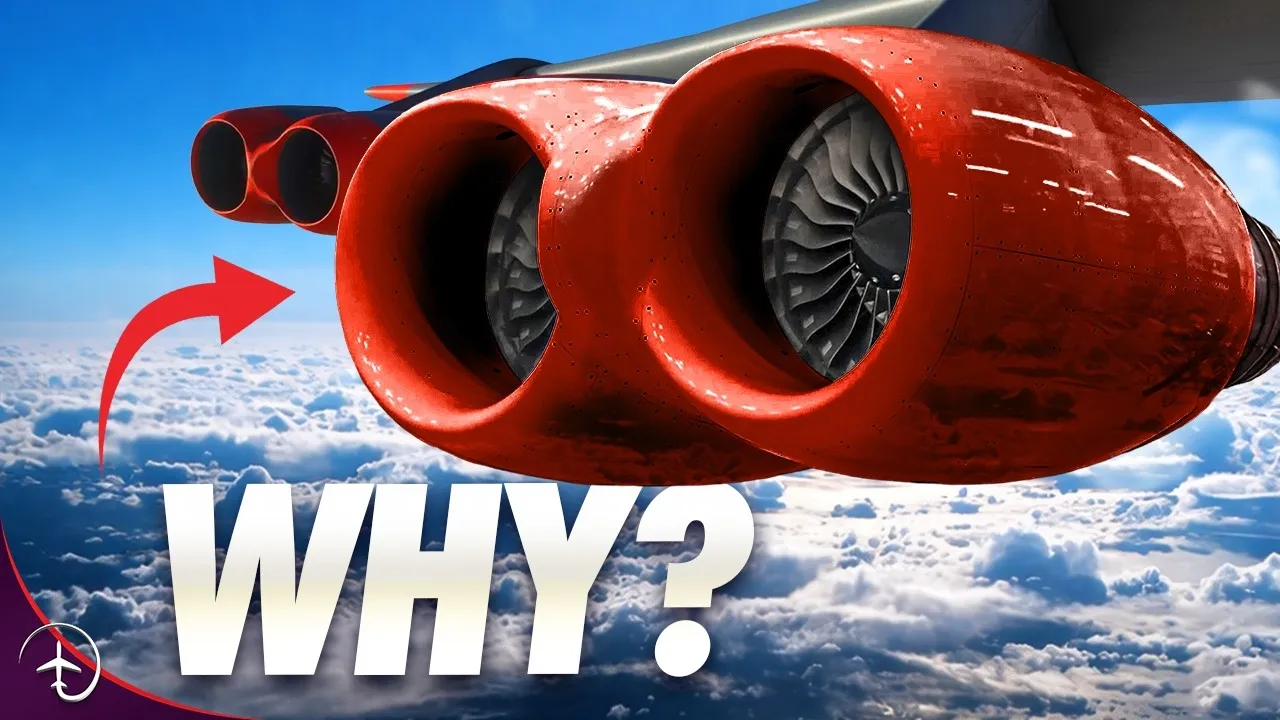
For decades, the B-52 Stratofortress relied on its eight Pratt & Whitney TF33 turbofan engines, a design dating back to 1958. These low-bypass engines, with a commercial variant (JT3D) used on Boeing 707s and Douglas DC-8s, were once considered modern and, crucially, were very common. Their widespread use across civilian and military platforms, including the Lockheed C-141 and earlier KC-135 tankers, meant that maintenance shops were familiar with them, and spare parts were readily available. However, that era has long since passed.
Consequently, the Air Force has resorted to increasingly unsustainable practices to keep the TF33s operational. This has involved cannibalizing old stock, reworking parts, and drawing from a dwindling reserve of spares. For years, the Air Force actively sought retired civilian 707s for their JT3D engines and parts. This stopgap measure is no longer viable; experts predict the TF33 will become completely unsustainable by 2030, as the industrial base to support it vanishes. Beyond the supply chain crisis, the TF33s are fundamentally outdated. They demand significantly more maintenance per flight hour than modern engines, produce less electrical power crucial for new avionics, and are dramatically less fuel-efficient. With a bypass ratio of 1.5:1, they are vastly inferior to contemporary engines like the LEAP 1 (nearly 11:1). While military concerns for efficiency differ from commercial, range is paramount. Improved fuel efficiency directly translates to greater range and easier flight planning, reducing the reliance on multiple air refuelings and enhancing operational flexibility for long-duration missions. The need for new engines is thus not just about maintenance, but about capability and strategic reach.
The Eight-Engine Conundrum: Why Not Four?
A seemingly logical solution to the B-52's engine problem would be to replace its eight aging TF33s with four modern, high-bypass turbofans. For instance, two 17,000-pound thrust TF33s could theoretically be replaced by a single Pratt & Whitney PW2000 engine (F-117 in military designation), which generates 37,000-43,000 pounds of thrust and is already familiar to the Air Force from its Boeing C-17 and C-32A fleets. Such a change would also be lighter than the original eight-engine setup. However, the decision to retain an eight-engine configuration, rather than simplifying to four, is rooted in profound engineering and economic realities.
The B-52's wings, designed in the 1950s, are intrinsically linked to the characteristics of eight smaller engines spread across their span. These engine pods and pylons are not just powerplants but also act as aerodynamic devices, influencing airflow and stability. Replacing them with larger, heavier nacelles of four modern engines would drastically alter the wing's bending moments, torsion, and flutter characteristics, potentially requiring extensive and costly structural redesigns and reinforcements to the wingbox. Furthermore, the loss of one engine from a four-engine aircraft creates far greater asymmetric thrust loads than losing one from an eight-engine configuration, necessitating larger rudder and tail surfaces, which in turn alters the entire airframe's stability. Ground clearance is another significant issue; the B-52’s anhedral wings place its outer engine pods close to the ground, and larger modern engines could demand a taller landing gear or radical pylon redesigns. Finally, the aircraft's complex plumbing for fuel, electrical, pneumatic, and hydraulic systems, all designed around an eight-engine layout, would require a complete and costly overhaul. The Air Force has studied this conversion multiple times since the 1970s, consistently concluding that the billions in additional cost, increased risk, and extended timelines would not yield sufficient operational benefits to justify certifying what would essentially be a new aircraft.