Overview & First Impressions
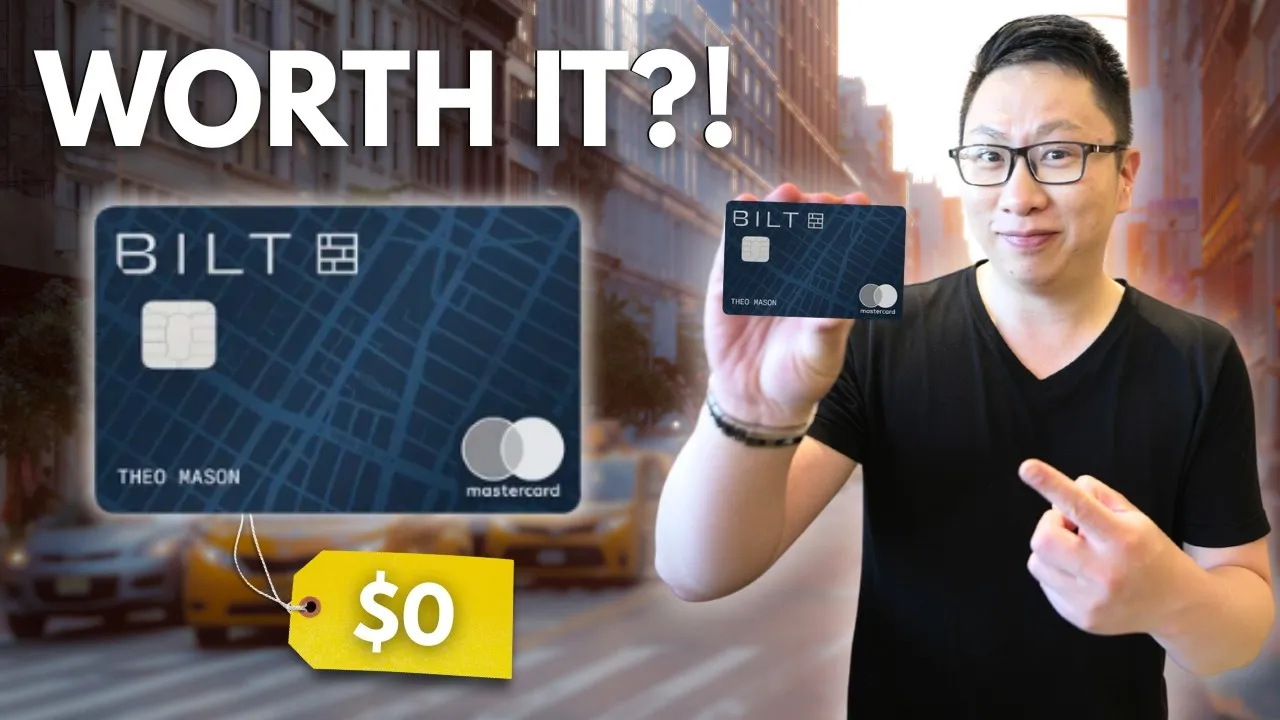
The Bilt Blue Card has emerged as a notable, albeit controversial, option in the credit card landscape, particularly for individuals seeking to optimize their everyday spending. Positioned as a potential 'landing pad' for those who previously held the original Bilt card, its core appeal lies in its no annual fee structure, making it an accessible choice for many. A significant advantage for global business travelers is the absence of foreign transaction fees, ensuring that international purchases do not incur additional costs.
At its heart, the card offers 1X points on everyday purchases, complemented by a distinctive 4% back in 'Bilt Cash'. This dual earning structure immediately sets it apart, requiring cardholders to understand how both points and cash-back mechanisms function. For those new to Bilt's ecosystem, evaluating the Blue Card necessitates addressing three fundamental questions: how to value any associated credits relative to an annual fee (which is not applicable here), how to assess the worth of Bilt points and Bilt Cash, and what alternative card options present themselves.
The card appears particularly suited for individuals with moderate monthly expenditures, typically ranging from $250 to $1,000. This spending level would yield approximately $10 to $40 in Bilt Cash each month, making the redemption options more manageable than for high-volume spenders. It's designed for those who may not wish to delve deeply into the complexities of credit card optimization but still desire a respectable return on their spending. However, potential cardholders should be prepared for the possibility of future adjustments to its earning structures, as is common with newer financial products.
Points & Perks: Valuation and Redemption
Understanding the true value of the Bilt Blue Card hinges on how one values both Bilt points and Bilt Cash, as their redemption options vary significantly. For those on 'Team Cashback', Bilt points can be redeemed as a statement credit at 0.55 cents per point, effectively yielding a 0.55% return. A more favorable cashback option exists for student loan payments with Bilt's partners, offering 1 cent per point, translating to a 1% return. Gift card redemptions typically fall in between, around 0.7 cents per point. However, for 'Team Travel', the potential value escalates considerably, with a target valuation of 2 cents per point when transferring to travel partners, which would effectively equate to a 4% return on 1X point earnings. This valuation, however, is highly personal and depends on one's ability to maximize transfer partner redemptions.
Bilt Cash introduces another layer of complexity. For 2026, redemption options include up to $10 per month towards Lyft rides, up to $25 per month for partner restaurants with mobile dining checkout, and up to $50 per month for sit-down dining experiences. While these options can be valuable, they come with monthly caps. For high spenders, accumulating, for example, $400 in Bilt Cash from $10,000 in spend, can quickly become prohibitive due to the limited viable redemption avenues. For the typical Bilt Blue Card user, with $10-$40 in monthly Bilt Cash, these options are more manageable, but the actual value realized depends entirely on whether these services align with the cardholder's spending habits. If fully utilized, the 4% Bilt Cash can be a genuine 4% return; otherwise, its effective value could drop to 1-2% or even lower.
Bilt also offers conversion options to turn Bilt Cash into Bilt points. 'Option 2' allows using $30 in Bilt Cash to earn 1,000 Bilt points (up to 1X of your rent), effectively converting three Bilt Cash for one Bilt point. This can yield approximately 2X Bilt points and 1% Bilt Cash, or an arguable 2.33X Bilt points, but it generally requires valuing Bilt points at 1 cent per point to be worthwhile. 'Option 1' allows cardholders to forgo Bilt Cash entirely in favor of earning multipliers on rent based on non-rent spend. This option involves intricate calculations, aiming for non-rent spend to align perfectly with certain thresholds relative to rent. For instance, if rent is $1,000 and non-rent spend is $750, this could yield 1,000 Bilt points on rent and 750 points on non-rent, totaling 1,750 points. At 1 cent per point, this translates to $17.50 on $750 non-rent spend, or 2.33% back. The complexity of these options often necessitates external tools, such as Bilt's own calculator, to determine optimal strategies, making the card less 'set-it-and-forget-it' than some alternatives.
Alternatives & Traps
While the Bilt Blue Card offers a compelling proposition for specific users, it operates within a competitive credit card landscape where numerous alternatives provide robust rewards, often with less complexity. For those prioritizing straightforward cashback, several long-standing options deliver a consistent 2% return on all purchases. These include the Fidelity Rewards Visa Signature Card, the City Double Cash Card (a favorite for its potential point upside if one later dives into transferable points), and the PayPal Cashback Mastercard. These cards offer a clear and predictable value, serving as a high 'hurdle rate' against which other cards like the Bilt Blue must be measured.
Beyond general cashback, specialized cards offer amplified rewards in common spending categories. The Wells Fargo Autograph Card, for instance, provides 3X points on dining, gas stations, travel, transit, popular streaming services, and phone plans, though its transfer partners are generally considered weaker. Another strong contender is the Capital One Savor Cash Rewards Credit Card, offering 3% back on groceries, dining, entertainment, and popular streaming, plus an impressive 5% on hotels, vacation rentals, and rental cars booked through Capital One Travel. These cards often outperform the Bilt Blue Card's 1X base earning in specific high-volume categories, making them attractive for optimizing particular spending habits.
However, prospective Bilt Blue Cardholders must also be cognizant of several inherent traps and risks. Firstly, as a newer player in the financial space, Bilt carries a degree of platform risk. History shows that some points platforms can be shut down, potentially leading to a loss of accumulated transfer upside. While periodic transfers can mitigate this, many prefer the diversification and stability offered by established bank point programs. Secondly, the 'move fast and break things' mantra common in startups means that earning structures and benefits can change rapidly, potentially being 'nerfed' within 6 to 12 months. What looks good today might be significantly altered tomorrow.
Furthermore, the card's intricate optimization strategies, particularly concerning Bilt Cash conversions and rent multipliers, can lead to 'min-maxing' fatigue. While appealing in principle, many cardholders eventually find the constant monitoring and calculation tiresome, detracting from the card's overall enjoyment and value. Lastly, for serious 'bonus hunters' adhering to rules like Chase's 5/24, dedicating a card slot to the Bilt Blue might represent a significant opportunity cost, potentially foregoing hundreds of dollars in introductory bonuses from other cards that offer higher returns on initial spend. Objectively, while the Bilt Blue Card can be good for its niche, it might be suboptimal in a broader credit card strategy, especially when factoring in these opportunity costs and the availability of more competitive multipliers for common expenses.